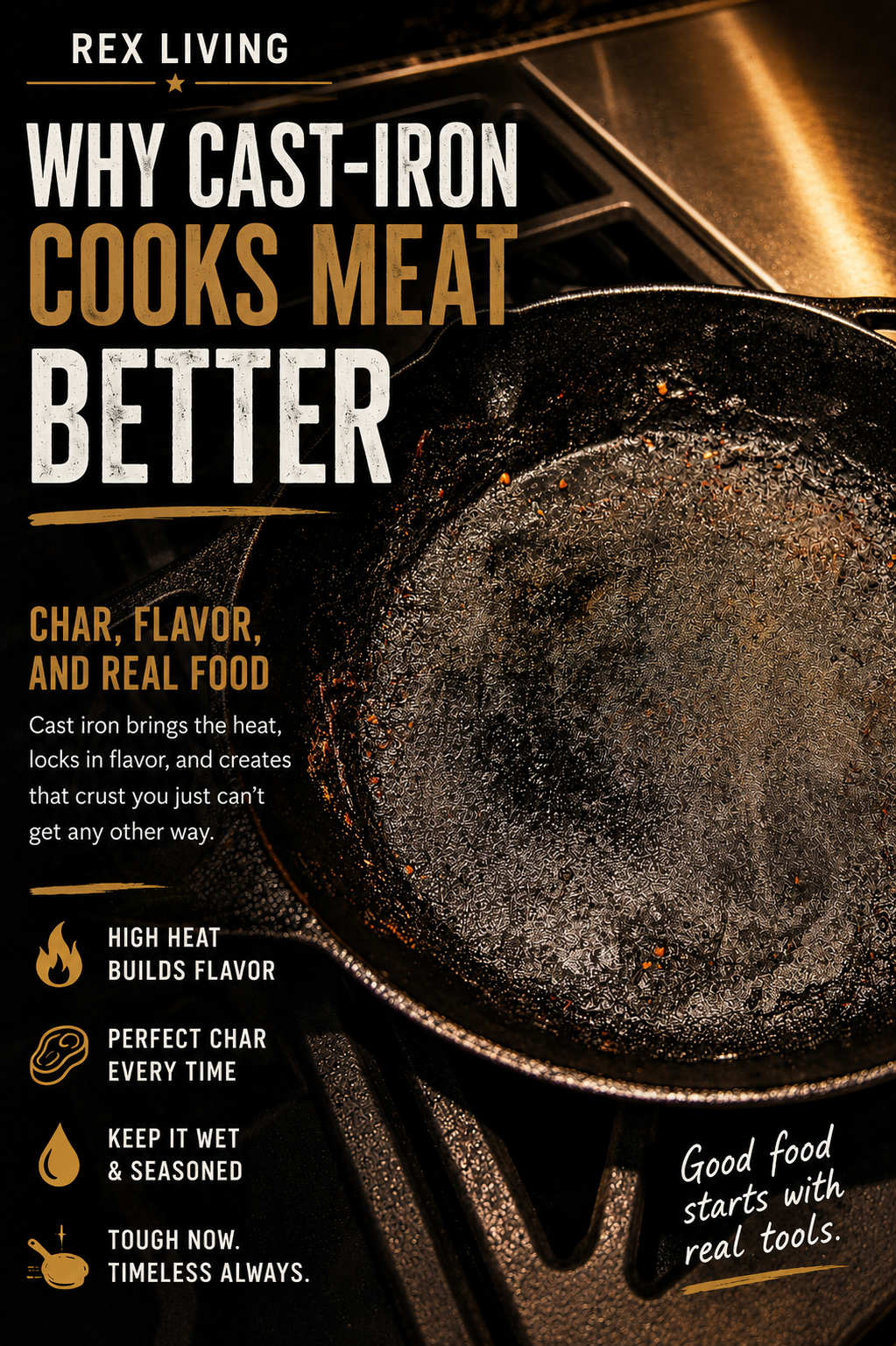
The Beauty of Cast Iron Cooking
There’s a reason steakhouse kitchens still reach for cast iron. It’s not nostalgia. It’s because when you want real flavor — the kind that hits before you even take a bite — cast iron does something other pans just can’t.
The moment meat hits a properly heated cast-iron skillet, everything changes. You get that aggressive sizzle. The edges start caramelizing almost immediately. Tiny bits of seasoning, oil, and rendered fat begin creating a crust that tastes smoky, salty, savory, and just a little primal in the best way possible. That char? That’s flavor. Real flavor. Not bottled sauce flavor. Not “smoke essence.” Actual developed flavor that only comes from high heat and patience.
And patience matters.
One of the biggest mistakes people make when cooking meat is moving it around too much. If you constantly flip it, poke it, or slide it across the pan, you interrupt the crust from forming. Cast iron rewards confidence. Put the meat down. Let it sear. Let the pan do its job.
But before any of that happens, the seasoning process matters just as much as the skillet itself.
I like to let the meat sit in a mixture of peanut oil and apple cider vinegar before cooking. The peanut oil helps everything brown beautifully because it can handle high heat without burning, while the apple cider vinegar tenderizes the meat and gives it a subtle tang that wakes everything up. Then the spices go directly into that mixture so they cling to every surface instead of falling off into the pan five seconds later.
The important part? The meat needs to stay wet.
Dry meat tossed into seasoning is usually disappointing. The spices sit on the outside like dust instead of becoming part of the flavor. When the meat is coated properly, the seasoning hydrates, sticks, and begins working before the cooking even starts. Even letting it sit for a few minutes makes a difference. The result is meat that tastes seasoned all the way through instead of just on the surface.
And once that hits cast iron, magic happens.
The oil and spices begin to toast. The vinegar helps create deeper browning. The fat renders slowly. The outside develops that dark crust while the inside stays juicy and tender. You end up with meat that tastes like it came from a restaurant kitchen, but honestly better because it tastes like your kitchen.
That’s another thing people forget about cooking: flavor isn’t only about ingredients. It’s about texture, heat, timing, and atmosphere. Cast iron creates an experience. The sound, the smell, the slight haze in the air when the pan is ripping hot — it feels intentional. It feels grounded. Like real cooking.
And unlike nonstick pans that eventually wear out and give up on life, cast iron gets better the more you use it. Every meal adds another layer of seasoning and history. It becomes part kitchen tool, part ritual.
Which is probably why food cooked in cast iron always tastes a little more alive.