Spring Planters That Actually Earn Their Spot by the Front Door
There are two types of spring planters:
The ones you threw together at the garden center in a pollen-induced haze, and
The ones that look like you casually moonlight as a landscape designer.
We’re aiming for option two.
The good news? It’s not about having a green thumb—it’s about having a strategy. And like most good design, it boils down to three things: structure, color, and texture. And yes, you’ve heard it many times before: thrillers, fillers, and spillers (yes, it sounds like a band, and honestly, they’d sell out).
The Holy Trinity: Thriller, Filler, Spiller
Let’s start with the backbone of any good planter.
Thriller (The Main Character Energy)
This is your vertical moment—the plant that says, “Yes, I live here and I have standards.”
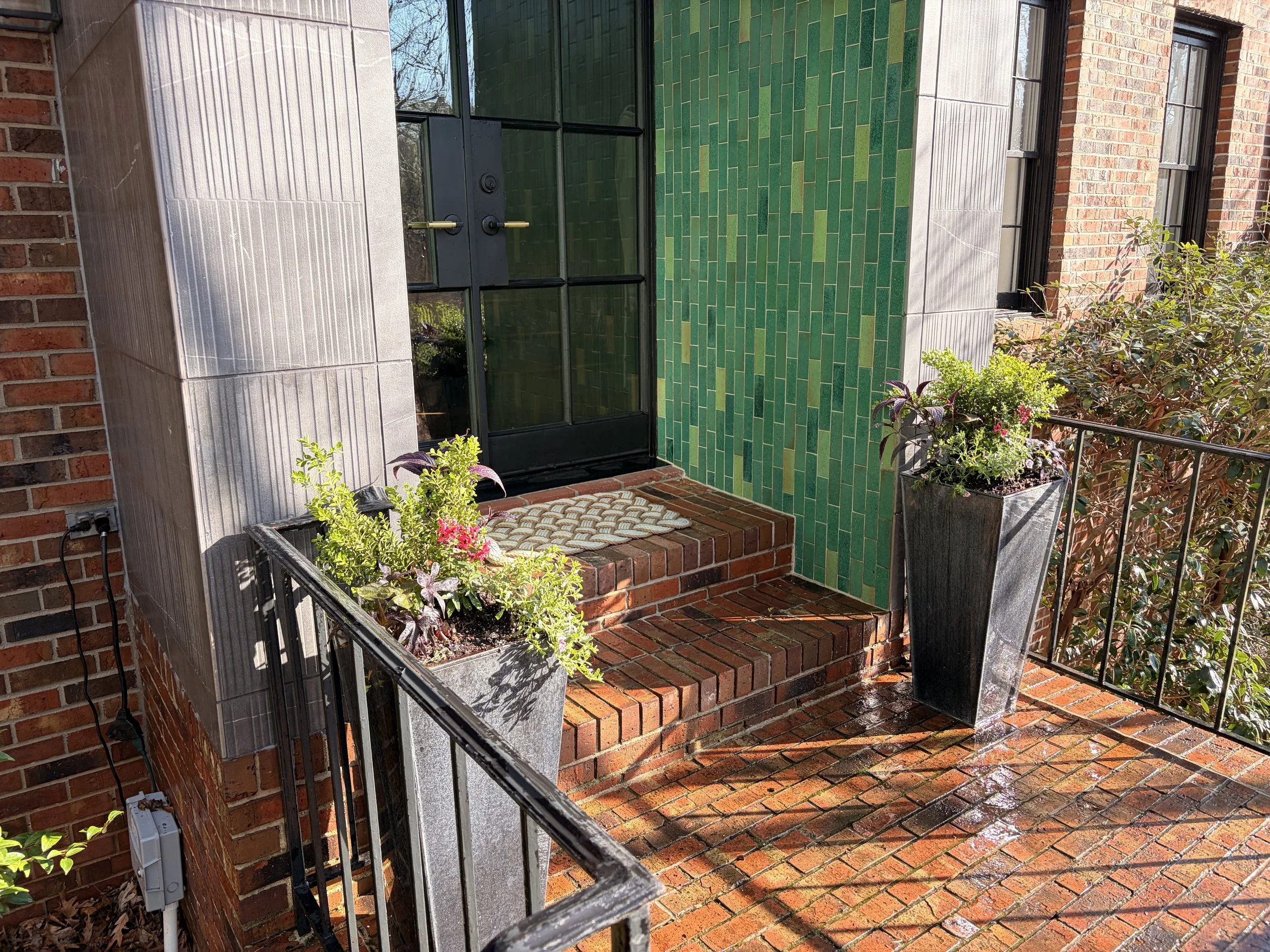
In your entry planters, that upright evergreen gives height and presence. It anchors the whole composition and draws your eye up toward the door. Without it, everything just kind of… sits there.
Rule of thumb: One strong thriller per container. No competition. This is not a group project.
Filler (The Supporting Cast That Makes the Plot Work)
Fillers bring volume and soften the look. They sit around the base of the thriller and make everything feel lush instead of sparse.
You’ve got this nailed with those bright seasonal blooms and leafy mid-height plants—they bridge the gap between structure and softness beautifully.
Pro move: Mix at least two types of fillers—one leafy, one floral. It keeps things from looking flat.
Spiller (The Effortless Overachiever)
Spillers are what make a planter look finished. They cascade over the edge and blur that hard line of the container.
In your planters, those trailing greens spilling over the sides? That’s the difference between “nice” and “who did these?”
Rule of thumb: If nothing is spilling, you’re not done.
Color: Coordination, Not Chaos
Here’s where people go off the rails: grabbing every flower that sparks joy and accidentally creating a botanical identity crisis.
Your planters do something much smarter—they limit the palette while still feeling vibrant.
The mix of greens (deep, lime, and variegated) creates cohesion
Pops of pink and purple add contrast without overwhelming
The containers themselves (those darker, modern planters) ground everything so it doesn’t feel chaotic
The takeaway:
Pick 2–3 main colors, then vary the shades of those colors. That’s how you get richness without noise.
Texture: The Secret Weapon
If color is what you notice first, texture is what makes you look twice.
And your planters? They’re quietly crushing it here.
Broad leaves next to delicate foliage
Glossy surfaces against matte greenery
Airy, wispy plants paired with dense, structured ones
That contrast is what keeps the eye moving. Without it, even the prettiest flowers can fall flat.
Quick test: Squint at your planter. If it looks like one solid blob, you need more texture.
A Note on Containers (Because Yes, They Matter)
Let’s not ignore the fact that my tall, modern planters are doing a lot of heavy lifting.
The height elevates the arrangement (literally and aesthetically)
The dark finish contrasts beautifully with the brick and greenery
The clean lines keep the look contemporary, even with traditional plants
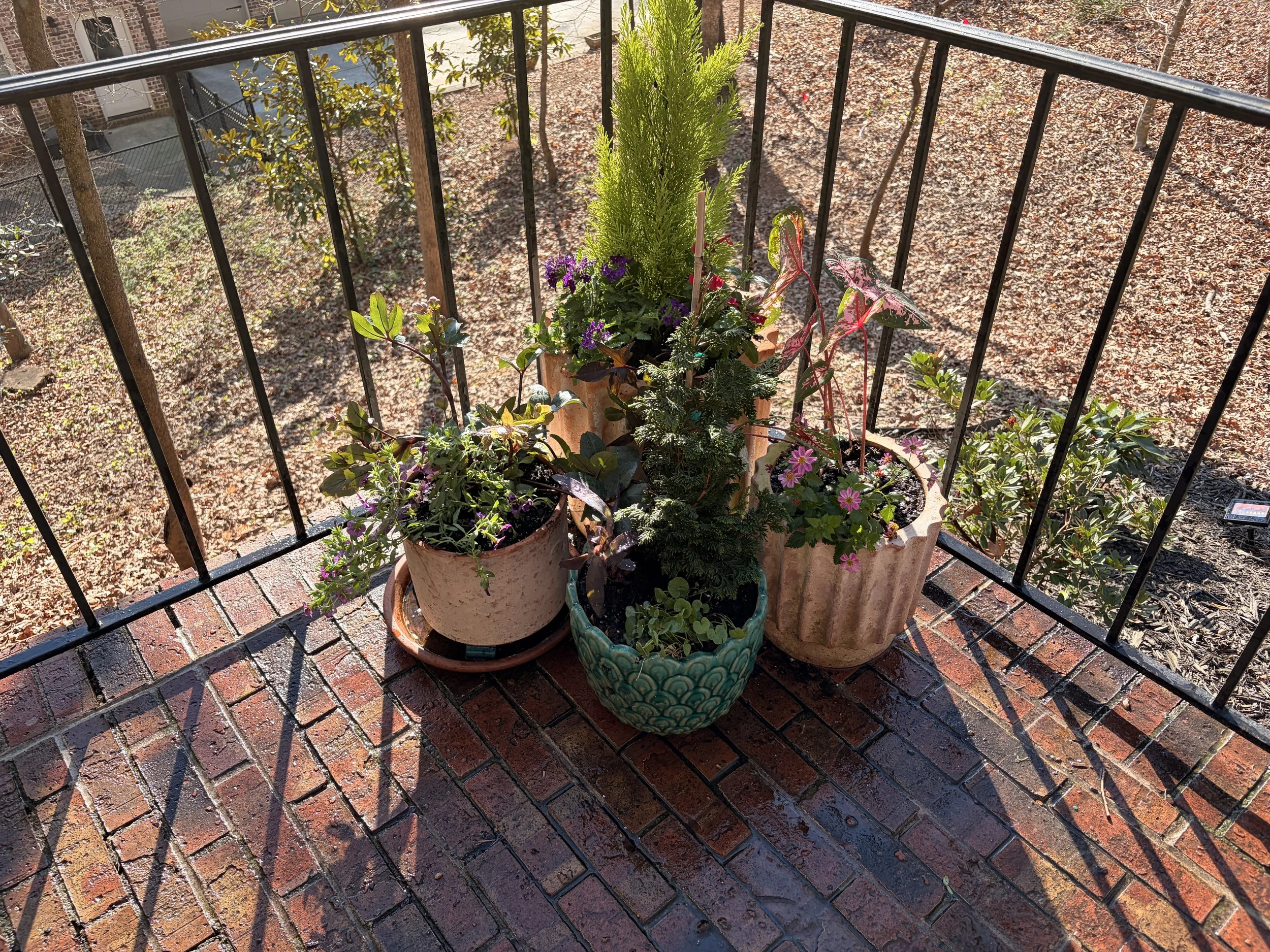
Meanwhile, my grouped pots on the patio lean more relaxed and collected—which works because they often the corner.
Translation: Match your containers to the vibe and structure of the space, not just the plants.
The Rex | Living Formula (Steal This)
If you want a foolproof planter every time:
1 Thriller (height + structure)
2–3 Fillers (volume + color)
1–2 Spillers (movement + softness)
2–3 Colors max (with varied shades)
At least 3 textures (so it doesn’t look flat)
Do that, and suddenly your front door looks less like an afterthought and more like a welcome.
Final Thought
Spring planters aren’t about perfection—they’re about intention. A little structure, a little restraint, and just enough drama to make it interesting.